

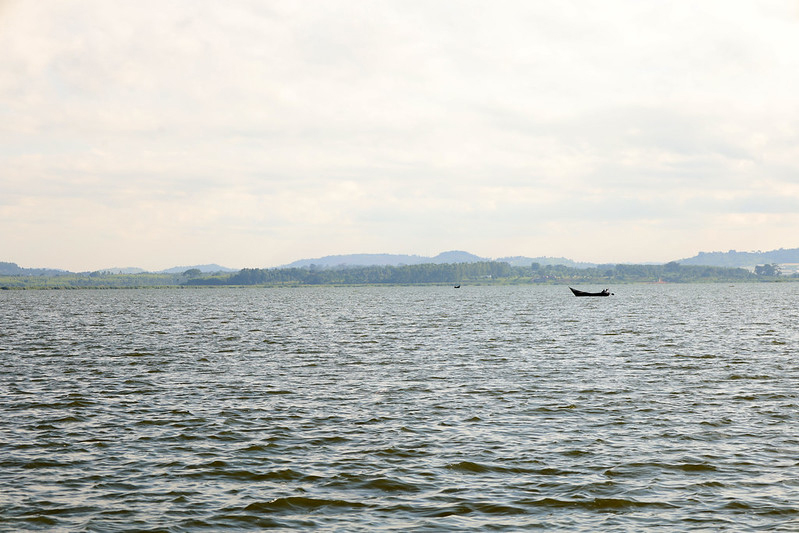
The Ministry of Water and Environment has attributed the recent foul odours emanating from parts of Lake Victoria to the decomposition of algae blooms, a recurring problem in the lake’s bays that has also been reported in previous years.
Lake Victoria, which supports over 45 million people across East Africa through drinking water, transport, fisheries, and hydropower, has several shallow bays in Uganda, including Inner Murchison Bay (IMB), Kitubulu, Nakiwogo, and Napoleon Gulf.
These areas are heavily utilized but also face significant pollution from surface runoff, municipal and industrial wastewater, human and plastic waste, and agricultural runoff.
Degradation of wetlands around the lake, which naturally filter nutrients and trap sediments, has worsened the situation.
According to the ministry, nutrient concentrations of nitrogen and phosphorus in the bays, especially IMB, have risen persistently, feeding algae growth.
“When algae from the blooms die and decompose, they consume oxygen and release gases such as hydrogen sulphide and ammonia, which are the source of the smell and unpleasant odours," the ministry said.
"This process also reduces oxygen levels in the water, which can be harmful to fish and other aquatic life.”
The recent dry season and high temperatures accelerated the decomposition of dead algae, releasing gases such as hydrogen sulphide and ammonia that create the stench affecting areas around Luzira and parts of Entebbe.
The process also depletes oxygen in the water, threatening aquatic life and potentially causing fish kills. Similar episodes of foul smells and dark green, slimy algae blocking parts of the lake were reported a few years ago and last year, highlighting the recurring nature of the problem.
The Ministry has outlined ongoing interventions, including restoring degraded wetlands, maintaining 200-meter buffer zones, conducting regular water quality monitoring, promoting cleaner production in industries, and enforcing effluent discharge standards.
Public awareness campaigns are also underway to encourage communities and stakeholders to take part in protecting the lake.
However, officials admit that more action is needed. Solid waste management, environment-friendly agricultural practices, stricter enforcement of public health regulations, and scaling up stakeholder awareness are among measures that must be strengthened to reduce pollution and control algae blooms.
The Ministry emphasized that tackling algae blooms and pollution in Lake Victoria requires coordinated efforts from communities, urban authorities, industries, government agencies, and environmental organizations to restore and maintain the lake’s ecological balance.
“This crusade of protecting the environment and saving our valued Lake Victoria requires input of every Ugandan,” the statement concluded.
